


KSQM
Is proudly supported by:























.png)



.png)

.png)

.png)
.png)










And By Listeners
Like You!


On Air Now!

News
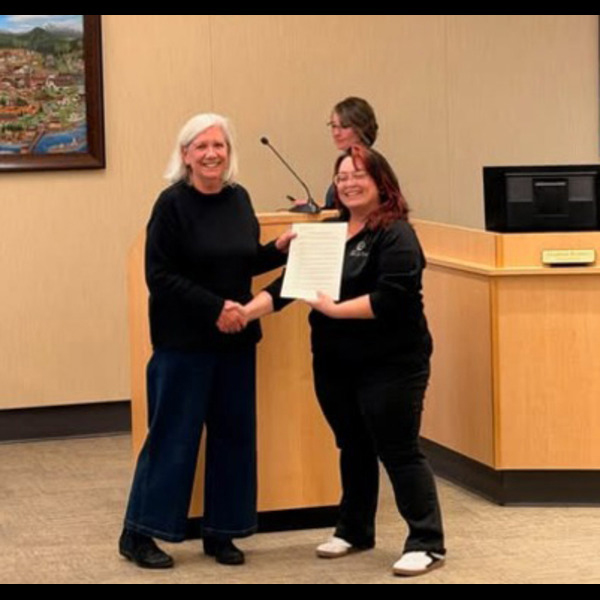
The Sequim City Council honored Barb Hanna at Monday’s council meeting on the occasion of her retirement after serving 16 years as the city’s first communications and marketing director. Part of her role has been to serve as the city’s public information officer during emergency operations to ensure that reliable information reached the public when it was most needed. A resolution read by Mayor Rachel Anderson said that she led the inaugural Sequim Sunshine Festival in 2020 celebrating Sequim’s spirit, resilience and pride of place.
In her remarks in response to the resolution, Barb thanked the Mayor and Council.
“Its bitter sweet for sure. But I do want to say that I have really being in this role for the last 16 years. Its given me an opportunity serve this city and community in a way that think would be possible when we move here. I have loved being part of something bigger and really important and I want to thank Matt and my co-workers for all of the support and friendship that they’ve shown me over the years and the City Managers that went before that that had faith in this position and support. And thank you to the community. I had always felt very, very supported in this role and I really appreciated it.”
She said she’s not going anyway. She’ll still be around town.
PHOTO Barb Hanna and Mayor Rachel Anderson
A critical staffing shortage at the Clallam County jail is forcing the Sheriff’s Office to temporarily pull its animal control deputy off that assignment.
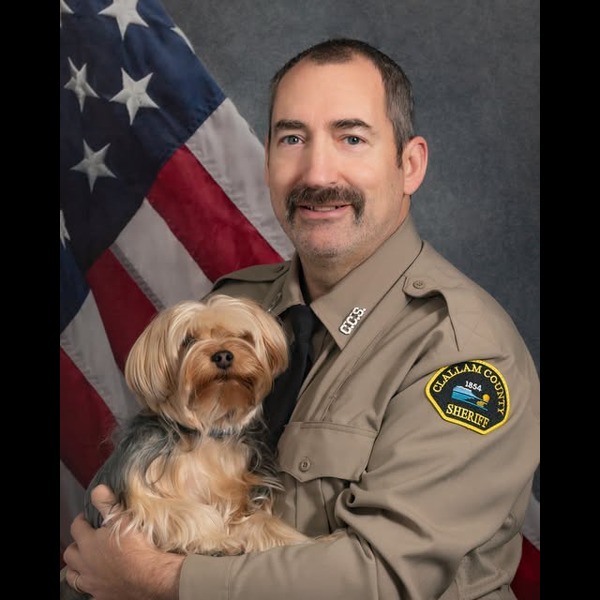
Corrections Deputy Ed Bauck, who has been serving as Clallam County’s Animal Control Deputy, is being reassigned to the jail through January 1st to help cover staffing gaps. The Sheriff’s Office says Bauck’s dual experience in corrections and animal control makes him the only deputy who can be shifted quickly during the shortage.
The move means the county will not have a dedicated animal control deputy for the rest of the year. Sheriff’s officials say animal?related calls will still be handled — patrol deputies will respond while Bauck is working in the jail.
For animal-related calls for service, please contact PenCom Dispatch at 360-417-2459 (Option 1).
For eligible non-emergency animal complaints, you may also file an online report through the Sheriff’s Office website: https://secure.coplogic.com/dors/en/filing/submitreport
For emergencies or situations involving an immediate threat to people or animals, call 911.
The Sheriff's Office did not say how many jail positions are vacant or what led to the "critical" staffing need. Bauck is expected to remmain assigned to the jail until January 1st.
PHOTO: Deputy Ed Bauck and Theo
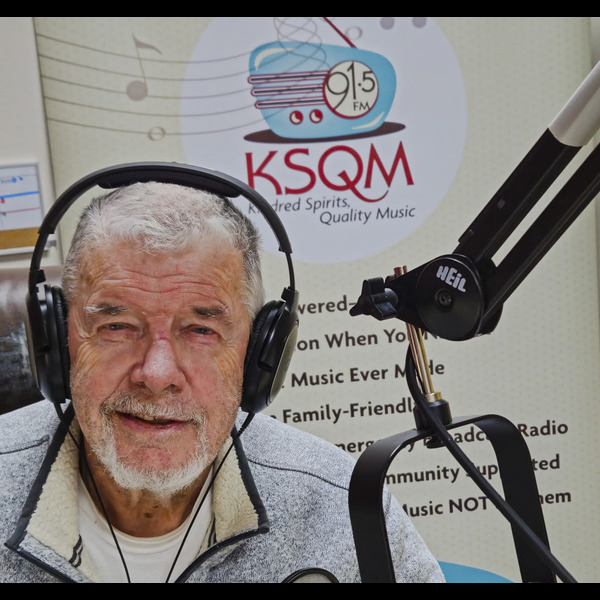
Longtime Peninsula broadcaster and beloved KSQM personality Dick Goodman has died.
Goodman passed away September 8th from pneumonia, while under hospice care at a small care home in Shoreline.
Dick had a long and distinguished career in broadcasting, including 14 years at KONP. He also spent 10 years hosting KSQM’s morning airwaves, from 2015 through 2025.
During those years, listeners came to know Dick for his warm personality, dedication to radio, and his unmistakable love of broadcasting.
his morning program — affectionately known as “The Dick Goodman Fiasco” — became a favorite among KSQM listeners.
Goodman began his career in broadcasting in 1953 with the Armed Forces Radio System (AFRS) in Kodiak, Alaska, now Armed Forces Radio Network. That was followed by a brief stint with an ad agency in Boston as a copy writer. Returning to Port Angeles in 1960, he began working with KONP, then on to KGY in Olympia in 1963.
His resume includes numerous stations across the state including KOMO, KING, KMPS and a summer at KIRO radio, all in Seattle. He served as a TV news anchor at KIMA and KNDO in Yakima and KXRO radio in Aberdeen.
In 1957, Goodman water skied — on one ski — from Port Angeles to Victoria. He believes it was the first attempt to cross the Strait of Juan de Fuca on one ski.
After retiring from KSQM, Dick moved to Seattle to be closer to his son.
Dick is survived by his longtime companion, Irene Irvine, and his children.
His final on-air shift on KSQM was Monday, March 3, 2025
He will be greatly missed by his KSQM family and by the many listeners who welcomed him into their mornings for a decade.
KSQM’s Buck Ellard will present a special tribute to Dick this Sunday, September 13th, at 5 p-m.

Move over, Seattle Seahawks. Step aside, Kraken. Washington's newest celebrity wears a mask, sleeps during the day, and has a weakness for garbage cans.
Meet Jimothy, the Ballard raccoon who's become an international internet sensation.
Jimothy has a rare condition called short spine syndrome, giving him his distinctive round appearance. A video of him waddling through a Seattle backyard has racked up millions of views, turning the longtime neighborhood visitor into an unlikely superstar.
The fame has now reached the Governor's office. Governor Bob Ferguson has named Jimothy Washingtonian of the Day, saying the little raccoon has inspired people with his resilience and ability to thrive despite his condition.
“I think one of the reasons he’s captured so much attention is he shows a certain resilience in getting by and even thriving, given that deformity. So he’s been honored in so many ways. He’s had murals, he’s had all kinds of stuff going on, which is entirely appropriate. There’s really only one more honor I think we can bestow upon Jimothy, and that is to make him the Washingtonian of the Day.”
Jimothy's celebrity status has already produced murals, bobbleheads, T-shirts, tattoos, and enough memes to keep the internet busy for quite a while. Even Google has gotten in on the act. Search for Jimothy, and a cartoon version of the famous raccoon scampers across your screen.
Seattle city leaders plan to honor Jimothy with an official proclamation later this month—assuming, of course, he doesn't have a prior engagement... like knocking over someone's recycling bin.
Public health officials have one important reminder: admire Jimothy from a distance. Don't feed him, don't try to pet him, and don't invite him home for dinner. As cute as he is, he's still a wild raccoon and could bite or scratch if he feels threatened.
So congratulations to Jimothy—the only Washington celebrity who's managed to win over the governor, Google, and millions of fans... without ever posting on social media.
And unlike many internet stars, Jimothy has never asked anyone to "like and subscribe."

The City of Sequim has a new Public Works Director, and he’s coming from Alaska with more than a decade of transportation leadership under his belt.
Christopher Goins, a former regional director for the Alaska Department of Transportation, started June 8 and was introduced to the City Council that evening. Goins told councilors he made a “major life decision” to move to Sequim, saying his family fell in love with the area during a visit last summer.
Goins wasn’t actively job?hunting, but when Sequim’s opening appeared, he said he wondered whether “the stars [were] aligning.”
He replaces Paul Bucich, who retired June 12 after two years with the city. Bucich spent his final week helping Goins get up to speed.
City Manager Matt Huish says Goins rose to the top of a pool of more than 40 applicants and was the unanimous choice of staff interview committees.
In a statement, Huish praised Goins’ experience and his “strong culture of staff development, individual ownership, and team accountability.”
Goins spent 11 years with Alaska DOT, most recently overseeing highways, airports, and ferry terminals as Southcoast Region Director. He’s also held engineering and construction leadership roles and has been quoted in Alaska media on high?profile issues, including the delayed Cascade Point ferry terminal project and regional flood response.
He told councilors his former job had become “exceptionally political” and made being a “family guy” difficult — another reason Sequim appealed to him. What stood out most, he said, was how people here “take care of one another.”
In a city press release, Goins said his goal is to build trust by listening first and working alongside employees, residents, tribes, businesses, and community partners “to help Sequim thrive.”
Before his Alaska tenure, Goins worked as an engineer for the City of Albany, Oregon. He holds a civil engineering degree from Oregon State University and has completed national executive?leadership programs focused on transportation agencies.
PHOTO: City of Sequim

KSQM is pleased to welcome veteran broadcaster Al Brady to the all-volunteer staff of our radio station. With 45 years of professional radio experience, Brady has agreed to accept the position of Program Director to lead programming for Sequim’s community radio station.
Brady’s extensive experience brings a background in programming, on-air performance, and community engagement. He recently relocated to Sequim after nearly a decade serving as Assistant Manager and Program Director at WVLG in The Villages, Florida.
Brady says joining KSQM is both a thrill and an honor.
He calls local radio a vital link to the community — a way to be there when listeners need it most — while sharing the timeless music people remember and love.
Often described as a walking encyclopedia of the rock ’n’ roll era, Brady has worked alongside legendary artists and broadcasters. In the mid-1980s, he served as a DJ and master of ceremonies at Little Darlin’s Rock ’n’ Roll Palace near Walt Disney World, where he co-hosted a nationally televised show with Hall of Fame broadcaster Wolfman Jack.
George Dooley, President of Sequim Community Broadcasting, says Brady brings passion, knowledge, and a genuine love of radio. Dooley says Brady’s leadership will strengthen the station’s mission and enrich the listening experience across the community.
KSQM first signed on the air December 7th, 2008. Broadcasting at 91-point-5 FM, the station is licensed to Sequim Community Broadcasting, a 501(c)(3) nonprofit organization. Operated entirely by volunteers, KSQM provides commercial-free programming throughout the greater Olympic Peninsula and Victoria, B.C., featuring local news, emergency information, timeless music, and community-driven programs and shows.
Brady will stepping in to fill the shoes of Tama Bankston who has been serving as interim Program Director for the past year.
 Facebook
 Youtube
 Google Plus
 Twitter